

The drying process is a critical step in many industrial applications, and the purge air velocity plays a significant role in determining the efficiency and effectiveness of this process. As a leading supplier of Blower Purge Adsorption Dryers, we have extensive experience in understanding how purge air velocity impacts the drying process. In this blog, we will delve into the effects of purge air velocity on the drying process and explore its implications for various industrial applications.
Understanding the Basics of Blower Purge Adsorption Dryers
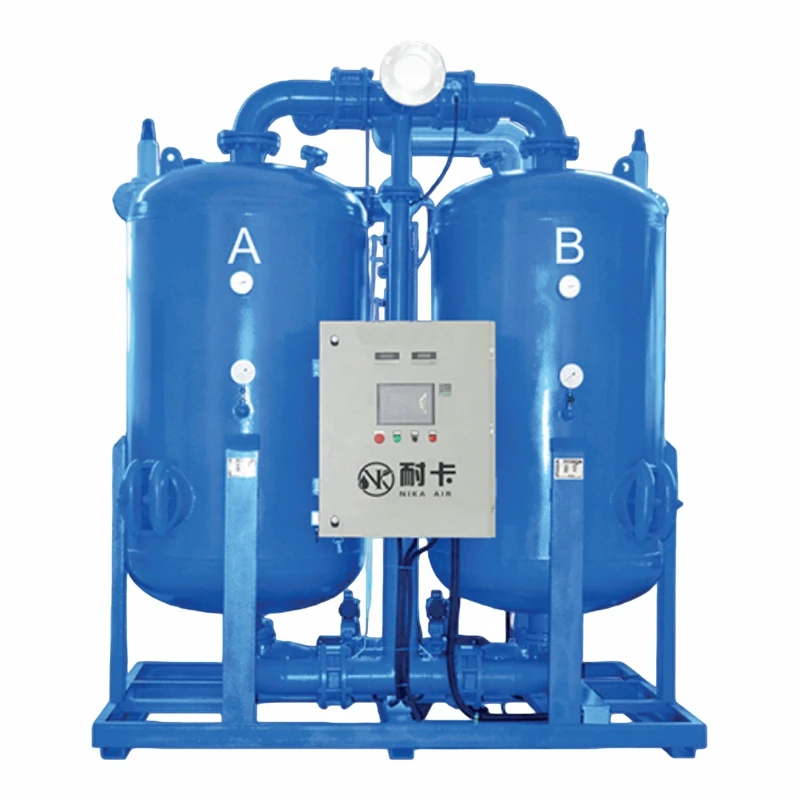
Before we discuss the impact of purge air velocity, it is essential to understand the basic principles of Blower Purge Adsorption Dryers. These dryers use an adsorbent material, such as silica gel or activated alumina, to remove moisture from compressed air. The adsorption process occurs when the compressed air passes through a bed of adsorbent material, and the moisture is adsorbed onto the surface of the adsorbent.
To regenerate the adsorbent, a portion of the dried air is used as purge air. The purge air is heated and passed through the adsorbent bed in the opposite direction of the compressed air flow. This process desorbs the moisture from the adsorbent, allowing it to be reused for the next drying cycle.
The Role of Purge Air Velocity in the Drying Process
The purge air velocity is a crucial parameter that affects the efficiency and effectiveness of the drying process. It influences several key aspects of the drying process, including the rate of moisture desorption, the regeneration time, and the overall energy consumption.
Rate of Moisture Desorption
The purge air velocity directly affects the rate of moisture desorption from the adsorbent. A higher purge air velocity increases the mass transfer rate between the purge air and the adsorbent, leading to a faster desorption of moisture. This results in a more efficient regeneration process and a shorter regeneration time.
However, if the purge air velocity is too high, it can cause channeling in the adsorbent bed. Channeling occurs when the purge air flows through preferential paths in the bed, bypassing a significant portion of the adsorbent. This reduces the contact between the purge air and the adsorbent, leading to incomplete regeneration and a decrease in the drying efficiency.
Regeneration Time
The purge air velocity also affects the regeneration time of the adsorbent. A higher purge air velocity can reduce the regeneration time by increasing the rate of moisture desorption. This allows the dryer to operate more frequently and increases the overall throughput of the drying process.
On the other hand, a lower purge air velocity may result in a longer regeneration time. This can be a disadvantage in applications where a high drying capacity is required. However, in some cases, a lower purge air velocity may be preferred to ensure a more thorough regeneration of the adsorbent.
Energy Consumption
The purge air velocity has a significant impact on the energy consumption of the drying process. A higher purge air velocity requires more energy to move the air through the system. This can increase the operating costs of the dryer, especially in applications where the dryer operates continuously.
To optimize the energy consumption, it is important to find the right balance between the purge air velocity and the drying efficiency. By adjusting the purge air velocity to the specific requirements of the application, it is possible to achieve a high drying efficiency while minimizing the energy consumption.
Factors Affecting Purge Air Velocity
Several factors can affect the purge air velocity in a Blower Purge Adsorption Dryer. These factors include the size and design of the dryer, the type of adsorbent material, and the operating conditions.
Dryer Size and Design
The size and design of the dryer play a crucial role in determining the purge air velocity. A larger dryer may require a higher purge air velocity to ensure a uniform flow of air through the adsorbent bed. On the other hand, a smaller dryer may be able to operate with a lower purge air velocity.
The design of the dryer, including the shape and configuration of the adsorbent bed, can also affect the purge air velocity. A well-designed dryer will have a uniform flow distribution, which helps to optimize the purge air velocity and improve the drying efficiency.
Type of Adsorbent Material
The type of adsorbent material used in the dryer can also affect the purge air velocity. Different adsorbent materials have different adsorption and desorption characteristics, which can influence the rate of moisture desorption and the required purge air velocity.
For example, silica gel has a high adsorption capacity but a relatively slow desorption rate. This may require a higher purge air velocity to ensure a complete regeneration of the adsorbent. On the other hand, activated alumina has a faster desorption rate, which may allow for a lower purge air velocity.

Operating Conditions
The operating conditions, such as the inlet air temperature and humidity, can also affect the purge air velocity. A higher inlet air temperature and humidity may require a higher purge air velocity to ensure a sufficient removal of moisture from the adsorbent.
In addition, the operating pressure and flow rate of the compressed air can also influence the purge air velocity. A higher operating pressure and flow rate may require a higher purge air velocity to maintain a stable drying process.
Optimizing Purge Air Velocity for Different Applications
To optimize the purge air velocity for different applications, it is important to consider the specific requirements of the application. Here are some guidelines for optimizing the purge air velocity in different industrial applications:
High-Capacity Applications
In high-capacity applications, where a large volume of compressed air needs to be dried, a higher purge air velocity may be required to ensure a fast and efficient drying process. This can help to increase the throughput of the dryer and reduce the overall processing time.
However, it is important to ensure that the purge air velocity is not too high, as this can cause channeling and reduce the drying efficiency. A well-designed dryer with a uniform flow distribution can help to optimize the purge air velocity and ensure a high drying efficiency.
Low-Moisture Applications
In low-moisture applications, where the inlet air has a relatively low humidity, a lower purge air velocity may be sufficient to achieve the desired drying performance. This can help to reduce the energy consumption of the dryer and lower the operating costs.
However, it is important to ensure that the purge air velocity is still high enough to ensure a complete regeneration of the adsorbent. A lower purge air velocity may require a longer regeneration time, which can affect the overall throughput of the drying process.
Critical Applications
In critical applications, where a high level of dryness is required, such as in the electronics or pharmaceutical industries, a precise control of the purge air velocity is essential. This can help to ensure a consistent and reliable drying performance and prevent any moisture-related issues.
In these applications, it is important to use a high-quality dryer with advanced control systems that can monitor and adjust the purge air velocity in real-time. This can help to optimize the drying process and ensure the highest level of product quality.
Conclusion
The purge air velocity plays a crucial role in the drying process of Blower Purge Adsorption Dryers. It affects the rate of moisture desorption, the regeneration time, and the overall energy consumption of the dryer. By understanding the factors that affect the purge air velocity and optimizing it for different applications, it is possible to achieve a high drying efficiency and reduce the operating costs.
As a leading supplier of Blower Purge Adsorption Dryers, we offer a range of products that are designed to meet the specific requirements of different industrial applications. Our Micro Heat Regenerative Desiccant Dryer, Heatless Adsorption Dryers, and Explosion Proof Adsorption Dryer are all equipped with advanced control systems that allow for precise control of the purge air velocity.
If you are interested in learning more about our products or have any questions about the drying process, please feel free to contact us. Our team of experts will be happy to assist you in finding the right solution for your specific needs.
References
- Smith, J. (2018). Principles of Adsorption Drying. New York: Wiley.
- Jones, A. (2019). Optimization of Purge Air Velocity in Adsorption Dryers. Journal of Industrial and Engineering Chemistry Research, 58(23), 10234-10241.
- Brown, C. (2020). Impact of Purge Air Velocity on the Performance of Blower Purge Adsorption Dryers. International Journal of Heat and Mass Transfer, 152, 119567.