


Vacuum Pump
European and American B2B English Product Description Self-Evaluation & Optimization Guide
Electric air compressors supply critical compressed air to manufacturing plants, production machinery, automotive workshops, and industrial automation systems. For importers, distributors, OEM buyers, and industrial procurement teams, selecting the right equipment requires matching technical specifications, duty cycles, and quality standards to specific operational demands.
This guide outlines compressor types, technical parameters, selection criteria, quality controls, and bulk purchasing requirements to help buyers evaluate configurations and issue precise requests for quotation.


Core Applications & System Integration
An electric air compressor uses an electric motor to drive a compression mechanism. Proper selection depends on required air output, working pressure, operating hours, installation conditions, and compressed air purity requirements. Common industrial deployments include:
Manufacturing plants
Supplying pneumatic tools, actuators, assembly lines, and production machinery.
Automotive workshops
Operating pneumatic impact tools, tire service equipment, and maintenance lifts.
Packaging and automation
Providing stable compressed air for automated controls, cylinders, and handling equipment.
Industrial maintenance
Supporting heavy-duty workshop operations and field servicing equipment.
Sustained continuous air consumption requires a different configuration than intermittent workshop demand. Where moisture, oil carryover, or particulate contamination must be controlled, the complete setup should integrate appropriate inline filters, refrigerated or desiccant air dryers, and automatic condensate management equipment.
Technical Specifications
Use the following parameters to compare models and confirm whether equipment meets application requirements.
|
Technical Parameter |
What to Confirm |
|
Compressor type |
Reciprocating piston or rotary screw |
|
Motor power |
Rated power in kW or HP |
|
Free air delivery (FAD) |
cubic meters per minute, liters per minute, or CFM at a stated operating pressure |
|
Working pressure |
Rated operating pressure in bar or psi |
|
Maximum pressure |
Maximum permitted pressure specified for the model |
|
Power supply |
Voltage, phase, and frequency |
|
Drive system |
Direct drive or belt drive, where applicable |
|
Lubrication |
Oil-lubricated or oil-free compression |
|
Cooling method |
Air-cooled or water-cooled |
|
Air receiver capacity |
Liters or gallons, if tank-mounted |
|
Duty cycle |
Permitted operating pattern and continuous run suitability |
|
Noise level |
dB(A) rating, including measurement distance and conditions |
|
Dimensions and weight |
Installation footprint, net weight, and shipping specifications |
|
Air treatment compatibility |
Integrated or modular filters, dryers, and drains |
Crucial Note: Motor power alone does not indicate usable compressed air output. Always request an official technical datasheet showing verified Free Air Delivery at your required operating pressure.
Compressor Types & Selection Criteria


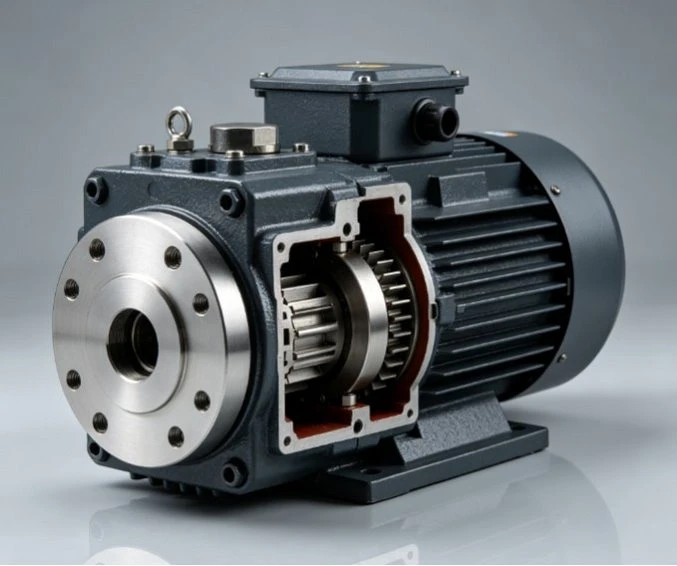
Reciprocating Piston Air Compressors
Piston compressors use a reciprocating piston mechanism to compress air. They are ideal for maintenance workshops, repair facilities, and applications with intermittent or variable air demand. Confirm rated pressure, delivered air volume, duty cycle limits, receiver capacity, and noise levels before purchasing.
Rotary Screw Air Compressors
Rotary screw compressors use interlocking rotating screws to deliver a continuous stream of compressed air. They are selected for manufacturing facilities, assembly plants, and heavy industries requiring sustained multi-shift compressed air supply. Compare air delivery at required pressure, operating hours, load variation, and energy efficiency.
Oil-Lubricated vs. Oil-Free Compressors
Oil-lubricated compressors: Require routine lubricant maintenance and efficient downstream filtration to manage oil carryover.
Oil-free compressors: Are engineered for industries with strict oil-contamination restrictions, such as food processing, electronics, and pharmaceuticals. Always request certified air-quality test documentation. Note that oil-free compression does not automatically eliminate moisture or particulate contamination.
Key Selection Factors
Air delivery and pressure: Calculate combined equipment consumption, factoring in peak demand and piping pressure losses. Compare verified Free Air Delivery rather than displacement figures.
Operating hours and load profile: Match the compressor duty cycle and starting frequency to your operational shifts.
Electrical compatibility: Verify voltage, single-phase or three-phase supply, frequency, and export destination compliance.
Total cost of ownership: Balance the initial purchase price against electricity consumption, maintenance intervals, and spare parts availability.
Quality Control & Factory Testing
Industrial buyers should evaluate product quality through verifiable records and defined inspection protocols rather than general marketing claims:
Component inspection
Checking supplied sub-components against approved engineering specifications.
Assembly inspection
Verifying mechanical installation, fasteners, piping connections, and electrical wiring.
Pressure and leakage checks
Conducting hydrostatic and pneumatic tests according to product design standards.
Operational testing
Checking motor starting, running conditions, pressure switch control, and vibration levels.
Performance testing
Verifying specified air delivery, working pressure, and power consumption under load.
Final inspection
Confirming model identification, accessories, safety labels, export packaging, and documentation.
For CE-marked or destination-regulated equipment, verify applicable regulations and supporting compliance documentation for the complete supplied configuration. Do not assume generic certificates cover custom variations.
OEM, Customization & Manufacturing Capabilities
Customization options should be validated against actual manufacturer production capabilities:
Motor configuration
Motor voltage, phase, and frequency adjustments for export markets.
Air receiver and package layout
Air receiver capacity and package layout modifications.
Air treatment integration
Integrated filter, dryer, and accessory combinations.
Control systems
Custom control panel configurations and digital interfaces.
Private labeling
Private-label branding, product labels, and customized user manuals.
Export requirements
Destination-market electrical connections and compliance documentation.
For OEM orders, approve technical specifications, model configurations, and nameplate details before mass production begins.
Bulk Supply & Project Support
Establish clear contractual terms for bulk or project orders to minimize procurement risks:
Model and configuration: Exact model numbers, rated parameters, and approved alternative components.
Quantity and lead time: Minimum order quantities, production schedules, and dispatch dates.
Batch consistency: Agreed inspection criteria and unit verification procedures prior to shipment.
Spare parts availability: Stocking of model-specific filters, lubricants, belts, and preventive maintenance service kits.
Packaging and shipping: Unit dimensions, gross weight, palletization method, and container loading requirements.
Documentation: Commercial invoice, packing list, technical datasheet, user manual, and conformity certificates.
Warranty and support: Coverage terms, technical support channels, and replacement part responsibilities.


Request a Quote Checklist
To receive an accurate commercial quotation for electric air compressors, please provide:
Application and operating hours: Expected daily usage environment and shift pattern.
Air delivery and pressure: Required Free Air Delivery in CFM or cubic meters per minute and working pressure in bar or psi.
Compressor type preference: Reciprocating piston or rotary screw.
Electrical supply requirements: Voltage, phase, frequency, and motor power preferences.
Air quality requirements: Oil-free or oil-lubricated specification.
Auxiliary equipment: Air receivers, refrigerated or desiccant dryers, line filters, or automatic drains.
Order details: Quantity, destination country, and expected delivery schedule.
Compliance and OEM needs: Private-label branding, custom paint, or specific international certifications.
With abundant experience, we are one of the most professional vacuum pump manufacturers and suppliers in China. Please feel free to buy customized vacuum pump made in China here from our factory. For quotation, contact us now.
Compact Vacuum Pump, Explosion Proof Vacuum Pump, Semiconductor Vacuum Pumps