


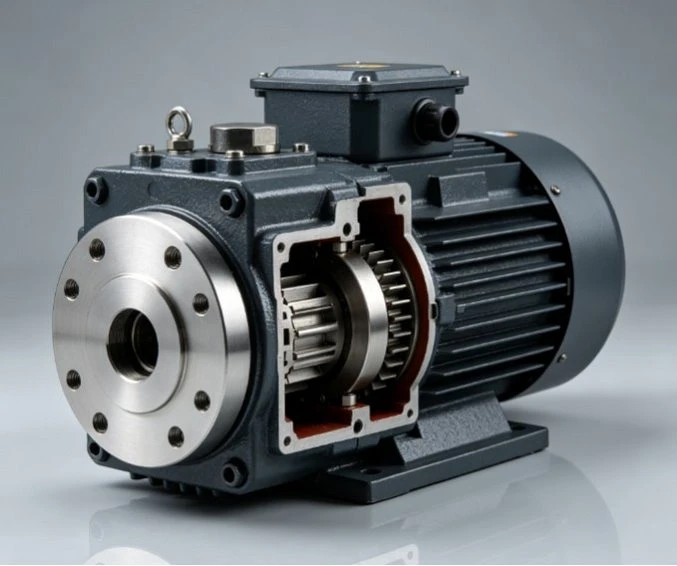
Product Overview
A Double Stage Rotary Vane Vacuum Pump uses two compression stages in series to achieve a lower ultimate pressure than a comparable single-stage rotary vane pump. It is engineered for industrial and laboratory processes where ultimate vacuum level, volumetric stability, and continuous operation take precedence over high nominal pumping speed.
Technical Data Sheet Matrix
|
Parameter |
Selection Consideration |
|
Pumping Speed |
Determines chamber evacuation timeline |
|
Ultimate Pressure |
Defines achievable low-pressure ceiling |
|
Motor Power |
Establishes electrical supply requirements |
|
Voltage / Frequency |
Regional grid compatibility |
|
Inlet / Outlet Flange |
System piping interface match |
|
Oil Filling Volume |
Determines maintenance cycle and thermal mass |
|
Operating Temperature |
Impacts oil degradation and long-term reliability |
|
Noise Level & Weight |
Dictates facility footprint and enclosure design |
Key Performance Advantages
High Ultimate Vacuum Capability: Advanced dual-stage compression design minimizes back-streaming and delivers a significantly lower ultimate vacuum limit for demanding applications.
Quiet and Low-Vibration Operation: Precision-engineered rotor-vane clearance and balanced mechanical assembly minimize noise and mechanical wear during continuous shifts.
Anti-Suckback Protection Mechanism: Integrated spring-loaded check valves or automatic isolation systems prevent oil and air from flowing back into the vacuum chamber when the pump stops unexpectedly.
Optimized Thermal Management: Extended cooling fins and efficient internal oil circulation pathways prevent overheating during sustained high-load operations.
Target Industrial Applications
Vacuum Drying & Sublimation: Lowers boiling points to remove moisture without thermal degradation. Requires strict vapor load monitoring.
Vacuum Degassing: Extracts dissolved air or volatile compounds from resins, silicone, oils, and metals.
Vacuum Distillation & Evaporation: Separates chemical fractions at reduced pressures. Solvent compatibility with pump oil is mandatory.
Freeze Drying (Lyophilization): Integrates with condensers to manage heavy water vapor flux under deep vacuum.
Refrigeration & HVAC Servicing: Evacuates moisture and non-condensable gases from closed refrigeration loops.
Laboratory & Analytical Systems: Provides backing vacuum for high-vacuum systems or supports controlled test chambers.
Operational Safety & Best Practices
Pre-Startup Oil Level Check: Always verify that the oil level is visible within the center of the sight glass prior to powering on to prevent severe bearing seizure and pump damage.
Warm-Up Protocol: Allow the pump to run with the inlet closed or on gas ballast for 10 to 15 minutes to reach optimal operating temperature before introducing heavy process loads.
Proper Shutdown Sequence: Isolate the vacuum system and open the gas ballast or an air-admission valve just before turning off the motor to purge residual vapors and prevent oil suckback.
Exhaust Ventilation Safety: Always vent the exhaust port outdoors or into a dedicated fume extraction system when pumping hazardous, toxic, or chemically laden gases.
Process Conditions Requiring Pre-Evaluation
Standard oil-sealed rotary vane pumps cannot be deployed blindly. The following conditions require specialized configuration or auxiliary protection:
High Water Vapor Content: Vapor condenses inside the oil, emulsifying the fluid and destroying ultimate vacuum. Gas ballast valves or upstream condensers are required.
Aggressive Solvents: Organic solvents can dissolve or thin the pump oil, causing loss of internal sealing and accelerated bearing wear.
Corrosive or Reactive Gases: Standard carbon steel/cast iron components and hydrocarbon oils react chemically with reactive species, necessitating inert fluids or specialized surface treatments.
Particulate Contamination: Dust entering the pumping chamber acts as an abrasive paste, ruining vane tolerances. Inlet particulate filtration is mandatory.
Structural Design & Working Principle
Dual-Stage Compression Mechanics: Gas enters the first high-volume stage, is compressed partially, and is then transferred directly into the second high-vacuum stage for final compression, drastically reducing the final pressure ceiling.
Precision Rotor-Vane Dynamics: Self-lubricating, chemically stable composite or carbon vanes are held outward by centrifugal force, maintaining a tight, continuous seal against the inner stator wall.
Total Immersion Lubrication: The entire pumping mechanism is fully immersed in an oil reservoir, providing simultaneous internal sealing, mechanical lubrication, and high-efficiency heat dissipation.
Direct-Drive Coupling: Direct motor-to-pump shaft alignment eliminates belt slip, reduces overall equipment footprint, and minimizes power transmission losses.
Routine Maintenance & Longevity Guidelines
Oil Condition Monitoring
Inspect fluid color and clarity regularly. Contaminated oil drops ultimate pressure performance instantly.
Gas Ballast Operation
Use gas ballast periodically to purge light condensables dissolved in the oil reservoir.
Filter Replacements
Service inlet dust filters and exhaust oil mist elements based on runtime hours and process load.
Leak Testing
Periodic helium or pressure decay testing ensures chamber integrity and prevents extended pump runtimes.
FAQ
Q: What is the main difference between single-stage and double-stage rotary vane pumps?
A: A double-stage pump routes gas through two successive chambers, reducing the compression ratio per stage and achieving significantly lower ultimate pressures than a single-stage alternative.
Q: Can a double-stage rotary vane pump handle pure water vapor?
A: Unfiltered water vapor condenses in the oil sump. While gas ballast helps purge minor vapor loads, heavy moisture applications require preliminary condensers or specialized chemical pumps.
Q: Why is my pump failing to reach its rated ultimate pressure?
A: Common causes include contaminated oil, system leaks, undersized vacuum piping, worn vanes, or a saturated exhaust filter restricting gas discharge.
Q: How often should vacuum oil be replaced?
A: Oil change intervals depend entirely on process cleanliness and vapor exposure. Visual inspection of oil clarity and performance testing dictate the actual service schedule.
Hot Tags: double stage rotary vane vacuum pump, China double stage rotary vane vacuum pump manufacturers, suppliers, factory, automotive vacuum system, Explosion Proof Vacuum Pump, high reliability vacuum system, industrial vacuum handling system, inline vacuum pump system, vacuum concentration system